Pesquisar este blog

Translate

quarta-feira, 30 de maio de 2012

Laboratório Ibérico Internacional de Nanotecnologia a "funcionar em pleno" só em 2014


Braga, 30 mai (Lusa) - O diretor do Laboratório Ibérico Internacional de Nanotecnologia apontou 2014 como data para o instituto "funcionar em pleno", admitiu "cortes" no financiamento e afirmou que Portugal e Espanha "mostraram" ser "capazes" de erguer "um dos melhores laboratórios do mundo".

Em entrevista à Agência Lusa, José Rivas explicou ainda que
a adesão de novos países ao Laboratório Ibérico Internacional de Nanotecnologia (INL) "é uma decisão de Estado que cabe a Portugal e Espanha".

Alvo de um
protocolo em 2005, pelos ministérios da Ciência, Tecnologia e Ensino Superior portugueses e o da educação e Ciência espanhol, o INL é o resultado de uma aposta no "reforço e na cooperação científica e tecnológica", nomeadamente nas áreas de nanociência e nanotecnologia, entre os dois países.

O INL foi "desenhado" para abarcar nos seus quadros 400 pessoas, das quais 200 "exclusivamente" investigadores profissionais. Atualmente, e um ano e meio após entrar em funcionamento,
o INL conta com "cerca de 80 investigadores" de 19 nacionalidades.
"Contamos estar a trabalhar em plena força apenas em 2014. Não é fácil encontrar talento de excelência", explicou assim José Rivas, referindo-se ao facto de o "quadro de pessoal" do INL estar ainda "a meio".

Além disso, apontou, "nesta fase inicial as preocupações vão ainda para a construção das estruturas e para a aquisição de equipamentos" o que, afirmou, "consome muitos recursos financeiros".

O financiamento do INL está a cargo dos dois Estados fundadores, Portugal e Espanha,
que, explicou o diretor, "comparticipam em partes iguais o orçamento do instituto, assim como asseguram em partes iguais as verbas que permitem aceder a fundos comunitários".

Confrontado com a possibilidade de "cortes" orçamentais, José Rivas afirmou que "é natural que assim aconteça".

Para o professor, "numa altura em que ambos países atravessam uma complicada crise económica é natural que haja cortes no financiamento a projetos como o INL".

Mas, lembrou, "da última Cimeira Ibérica saíram sinais positivos de aposta no projeto" com ambos os governos a concordarem dar um "impulso conjunto adicional" ao INL.
Até porque, afirmou, "Portugal e Espanha mostraram ser capazes de erguer um dos melhores laboratórios do mundo" pelo que disse acreditar "que ambos estão firmes no propósito de fazer com que tudo corra bem".

Questionado sobre para quando estaria prevista a adesão de um novo Estado ao INL, objetivo previsto nos estatutos do instituto, Rivas explicou que "não depende do INL".

Segundo explicou, "
cabe aos Estados fundadores o convite ou aceitação de um novo parceiro para o laboratório pelo que essa é uma decisão governamental".

O INL tem uma área de 47 mil metros quadrados das quais "se destacam" a Sala Limpa e os Laboratórios de Alta Precisão, e dedica-se a quatro áreas "estratégicas" de investigação: nano medicina, meio ambiente e controlo alimentário, materiais com nano eletrónica e manipulação molecular de pequenos instrumentos a nível químico.

"Estamos a fazer investigação de ponta ao nível do que melhor se faz no mundo", garantiu José Rivas.
JYCR
Lusa/Fim

Nobel Laureate Harold Kroto lecture at INL


Sir Harold Kroto, one of the co-recipients of the 1996 Nobel Prize in Chemistry will deliver at INL, in Braga (Portugal) a lecture entitled «Carbon in Nano and Outer Space», next Friday, June 1st, at 17h00, in the INL Auditorium.
Harold Kroto is an engaged advocate for science education. He is heavily involved with GEOSET, a Global Educational Outreach for Science, Engineering, and Technology programme which he initiated. 
The programme seeks to exploit the revolutionary creative dynamics of the Internet to improve general level of science understanding and awareness worldwide.
Kroto is currently a Francis Eppes Professor of Chemistry at Florida State University, where he is carrying out research in nanoscience and cluster chemistry as well as developing exciting new Internet approaches to STEM (Science, Technology, Engineering, Math) educational outreach. He is a Fellow of the Royal Society of London, and holds an emeritus professorship at the University of Sussex in Brighton, United Kingdom.
The research program focuses on the complex range of molecular constituents in carbon valour; the development of novel 2 and 3D metal-cluster/organic frameworks as well as peptides; the stabilisation of small fullerenes; and carbon nanotube based devices behaviour.
Attendance is free although subject to prior registration. For attendance please contact isabel.machado@inl.int

How Nanotechnology Can Help Detect Disease Earlier


A new study led by University of Kentucky researchers shows a new way to precisely detect a single chemical at extremely low concentrations and high contamination.

The study, published online for ACS Nano, was carried out in the laboratory of Peixuan Guo, the William S. Farish Endowed Chair in Nanobiotechnology at the University of Kentucky Markey Cancer Center. The study shows that the phi29 DNA packaging nanomotor connector can be used to sense chemicals with reactive thioesters or maleimide using single channel conduction assays based on three observable fingerprints. This channel system could be further developed into very sensitive sensing devices.

The ability to detect a chemical at a low concentration and high contamination is especially important for environmental surveillance, homeland security, athlete drug monitoring, toxin/drug screening, and earlier disease diagnosis.
In the case of disease diagnosis, the production of an unusual metabolic product is a feature of disease, but in early stages, the concentration of this product is very low. Single molecule detection will facilitate the early detection of disease such as cancer, so as to facilitate earlier treatment.
"Sensitivity of detection is a major challenge in the diagnosis of many diseases," said Guo. "Our next step is to find one metabolic product of one disease and determine the reality in earlier disease diagnosis."
"The proof-of-principle studies described in this study will be extended in the future to engineer multiple probes within a single pore for concurrent detection of multiple targets at the single molecule level in real time," said Farzin Haque, research assistant professor at the UK College of Pharmacy, and first author on the paper.

White House Blocking EPA Efforts to Issue Rules on Nanomaterials, Advocates Say

The White House appears to be blocking Environmental Protection Agency efforts to tighten oversight of engineered nanoscale pesticides and other chemicals, according to environmental and safety advocates.

Richard Denison, a senior scientist with the Environmental Defense Fund, told BNA May 23 that he has spoken with EPA officials who have told him they do not expect any regulations for engineered nanoscale pesticides or chemicals to be approved by the White House Office of Management and Budget.

“My understanding is that there is a view in some circles in the White House that they do not want to stigmatize nanomaterials nor stifle the technology even by requiring the reporting of information that EPA needs to make judgments as to whether there are risks,” Denison said.

Jaydee Hanson, senior policy analyst at the Center for Food Safety, said he believes OMB will not approve the agency's preferred approach to collect data on nanoscale pesticide ingredients under Section 6(a)(2) of the Federal Insecticide, Fungicide, and Rodenticide Act.
“I am of the opinion that OMB has basically told the EPA, 'Don't bother' ” with a final rule, Hanson said.

Lynn Bergeson, an attorney with Bergeson and Campbell PC, told BNA she has heard that EPA's progress on an information collection policy for nanoscale pesticides has stalled. “That whole approach has died on the vine,” she said.

FIFRA Proposal.
Denison and Hanson referred to two rulemakings.

EPA published a proposed rule in June 2011 that would allow the agency to obtain information on engineered nanoscale pesticide ingredients under either Section 6(a)(2) of FIFRA or through data call-in notices authorized under Section 3(c)(2)(B) of FIFRA (35 CRR 588, 6/13/11).

In the proposal, EPA said it would prefer to collect information under Section 6(a)(2), which requires registrants to inform the agency of additional information related to “unreasonable adverse effects on the environment,” because it is “the most efficient and expedient administrative approach.”

Hanson said he has attempted to speak with OMB and EPA officials on the status of the rule, but has been unable to obtain any official comment on it.

Neither EPA nor OMB responded to requests May 23 for information on the status of the 2011 EPA proposal on nanoscale pesticide ingredients.

TSCA Proposal.
Denison also discussed a proposed rule EPA's Office of Pollution Prevention and Toxics has developed to obtain information on engineered nanoscale chemicals after it was unable to secure information through a voluntary program. In 2009, EPA said it would be developing regulations for engineered nanoscale chemicals because industry had failed to provide information voluntarily (33 CRR 355, 4/13/09).

OPPT submitted its regulatory proposal--which combined a data collection rule authorized by Section 8(a) of the Toxic Substances Control Act with a significant new use rule (SNUR) authorized by TSCA Section 5(a)(2) for engineered nanoscale chemicals--to OMB on Nov. 22, 2010 (36 CRR 409, 4/9/12).

That proposed rule has neither been approved nor withdrawn, and OMB has remained publicly silent on its position on the rulemaking.

OMB Said to Avoid 'Stigmatizing' New Technologies.
On March 11, 2011, OMB issued guidance to federal agencies that said, “regulation and oversight should avoid unjustifiably inhibiting innovation, stigmatizing new technologies, or creating trade barriers” (35 CRR 313, 3/21/11).

Subsequently, on June 9, 2011, the White House issued a memo encouraging federal agencies to base their decisions on nanomaterials using “the best available scientific evidence” (35 CRR 582, 6/13/11).

Denison said EPA has been trying to obtain such evidence, but its efforts have been blocked for years by some industry groups.

EPA May Move Ahead With Alternative Approach.

Hanson said EPA may move forward with an alternative approach of voluntarily asking registrants to submit data on nanoscale ingredients.

EPA has already requested additional data from the registrants of pesticide products containing nanosilver, according to Hanson.

Rosalind Volpe, executive director of the Silver Nanotechnology Working Group, an industry group, declined to comment on EPA's proposal to collect information on nanoscale ingredients in pesticides.

Hanson said voluntary data requests are unlikely to be successful because registrants are not under any legal obligation to respond.

He said businesses will be unlikely to “report on the problems of their chemical” if their competitors are not required to do the same. EPA's initial approach, to gather information under Section 6(a)(2) of FIFRA, was better because all pesticide registrants would be on the “same playing field,” Hanson said.

Denison also was skeptical of the effectiveness of any voluntary approach for pesticides, citing OPPT's failure to obtain information voluntarily.

Bergeson said she had not heard about a voluntary data call-in, but unless that is backed up with the regulation allowed under FIFRA Section 3(c)(2)(B), she is skeptical that EPA will obtain the information it is seeking.

Bergeson and the Nanobusiness Alliance, a trade association representing companies working with nanotechnologies, have consistently urged manufacturers to cooperate with EPA in its efforts to obtain information on engineered nanoscale materials to inform its regulations.

Group Weighing Legal Options.
Hanson said the Center for Food Safety is weighing its legal options related to a May 2008 petition on the use of nanosilver in consumer products.

The petition, filed by the Center for Food Safety, Beyond Pesticides, Greenpeace, Friends of the Earth, and the International Center for Technology Assessment, requested that EPA classify nanoscale silver as a pesticide, require nanosilver products to be regulated as pesticides, and take steps to ensure that retailers stop selling nanosilver products that have not been registered as pesticides (32 CRR 438, 5/5/08).

EPA has not issued a formal response to the petition, which Hanson said is “verging on an unreasonable delay.” The coalition did not file lawsuits over the EPA's failure to respond because it appeared the agency was making “good progress” by issuing proposed regulations, Hanson said.

The Center for Food Safety will have to reconsider its legal options if EPA does not proceed with formal regulation of nanoscale materials in pesticides, Hanson said.

In a separate but related development, the International Center for Technology Assessment, which works with the Center for Food Safety, is weighing its legal options to prod the Food and Drug Administration to issue regulations for engineered nanoscale ingredients in cosmetics and food (see related story).

Faperj aplica R$ 60 milhões em editais de pesquisa no Rio

Por Alana Gandra


Logomarca Faperj

Fontes de energias renováveis, habitação e urbanização, meio ambiente e petróleo e gás são algumas das áreas consideradas prioritárias pelo edital


A Fundação Carlos Chagas Filho de Amparo à Pesquisa do Estado do Rio de Janeiro (Faperj) assinou hoje (23) contratos com 262 pesquisadores para execução de projetos aprovados em cinco editais, lançados este ano pela instituição. Os recursos somam R$ 60,1 milhões.
O maior volume de recursos (R$ 45 milhões) e o maior prazo para conclusão dos projetos (36 meses) foram dados ao edital Pensa Rio, cujo objetivo é apoiar o estudo de temas relevantes e estratégicos para o estado. "Ele procura induzir os pesquisadores ao tratamento de determinados pontos críticos para o Rio de Janeiro", informou à Agência Brasil o chefe de gabinete da Faperj, Roberto Dória.
Agricultura familiar, orgânica, sustentável e industrial; biodiversidade; biotecnologia; dependência química; desenvolvimento sustentável e conservação de espécies; fármacos; fontes de energias renováveis; habitação e urbanização; meio ambiente; nanociência e nanotecnologia; petróleo e gás; tecnologia nuclear; violência e segurança pública são algumas das áreas consideradas prioritárias pelo edital. Serão apoiados 131 projetos em 17 instituições de ensino e pesquisa fluminenses.
O Edital de Apoio a Equipes Discentes em Projetos de Base Tecnológica para Competições de Caráter Educacional é inédito e terá recursos de R$ 500 mil. Ele visa financiar projetos de base tecnológica de estudantes fluminenses do ensino médio ou superior para participação em competições de caráter educacional, que possibilitem experiências com novas tecnologias, inovação ou empreendedorismo. Entre os exemplos de projetos estão a construção de robôs e barcos não tripulados. Foram aprovados para realização 22 projetos.
Dória não tem dúvidas que este edital será um sucesso e deverá ganhar periodicidade anual, porque os resultados dos projetos vão ser muito tangíveis. "A vibração deles [estudantes] vai contaminar os professores e a instituição", acredita.
O apoio à atualização de acervos bibliográficos de instituições de nível superior públicas e privadas é a meta do Edital de Apoio à Atualização de Acervos Bibliográficos nas Instituições de Ensino Superior e Pesquisa, cuja outorga foi entregue hoje pela Faperj. Ele prevê a aquisição de obras para atualização do acervo ou de títulos novos para equipar as bibliotecas. "Esses títulos têm que ficar também disponíveis no catálogo", disse Dória. A dotação alcança R$ 2,6 milhões.
O Edital de Apoio ao Estudo de Doenças Negligenciadas e Reemergentes foi lançado pela Faperj pela segunda vez, com recursos de R$ 5,7 milhões. O edital objetiva fomentar estudos sobre um conjunto de doenças, que englobam doença de Chagas, dengue, malária, tuberculose, entre outras, classificadas pela Organização Mundial da Saúde (OMS) e pelo Ministério da Saúde como sendo reemergentes ou negligenciadas.
"Normalmente, são doenças que afetam países e populações pobres e os laboratórios, de modo geral, não se preocupam em estudar isso, porque não são doenças que afetam o mundo rico", disse Dória. A proposta é que a Faperj financie tanto diagnósticos, como vacinas, tratamento e controle de vetores relacionados a essas doenças.
A Faperj vai financiar, através do Edital de Apoio à Pesquisa Clínica em Hospitais Universitários, ainda a pesquisa clínica em hospitais universitários com recursos da ordem de R$ 6,3 milhões. "Acho que o edital tem um apelo interessante porque, além de fomentar a pesquisa, ele permite a formação de recursos humanos na área da saúde, em graduação e pós-graduação e, em consequência, prevê a aquisição de equipamentos que atendem à população", disse o chefe de gabinete.
Dória avaliou que além do desenvolvimento da própria pesquisa em si, os editais permitem a recuperação da infraestrutura de pesquisas nas instituições de ensino do Rio. "Essa é uma característica forte de todos os editais que a Faperj tem praticado". 

Nanotechnology Now an Unseen Success

By: Constance Gustke, Special to CNBC.com

To battle tough performance gear competitors like The North Face, Dick’s Sporting Goods
recently began harnessing nanotechnology. The Pittsburgh-based company coated jackets in its private-label, Koppen line with a water-repellant chemical called Aquapel, which attaches hydrophobic nano-sized whiskers to individual fibers.

Consumers want more juice for the squeeze, explains Shian-Li McGuire, a brand manager at Dick’s Sporting Goods. Hard-core sports enthusiasts, she adds, are especially pushing fabric innovation. So last year, the company hired a fabric specialist, who searches for new ways to manipulate fabrics.
Micron chip for nanotechnology
Source: Micron World's highest
capacity NAND flash memory die
developed by Micron and Intel.
Across the country, Boise, Idaho-based chipmaker Micron has been using nanotechnology innovation as a global product differentiator for years. Micron uses nanotech to pile more circuits onto a chip wafer, reducing costs over time. The result — more computing power in a handheld cellphone than a big computer in the 1980s.
“Without this technology, there would be no place for us,” says Dean Klein, vice president of memory system development at Micron. “We make the world’s most advanced chips.”
Micron has spent billions of dollars creating fabrication rooms where chips are built.
Consumer goods companies have it easier than Micron. Some nanotechnology research labs and upstarts are supplying resins and chemicals that contain nanotechnology. For example Nano-Tex, which supplies Aquapel to Dick’s Sporting Goods and other companies, sells chemicals that coat fabric.

Creating buzzworthy new products in crowded marketplaces is a must-do goal these days. So apparel makers like Eddie Bauer and Dockers, a unit of Levi Straus, count on nanotechnology to add strength, durability or other performance properties to their fabrics.

The tiny, powerhouse technology is also being harnessed in key industries like energy, building and construction, high-tech, paints and medical device industries.

Consumer goods companies, for example, are folding nanotechnology into everything from golf balls to beer bottles.

Why? Because nanotechnology essentially manipulates molecules, making it an all-purpose — and increasingly important — process. Such wide-ranging uses has experts calling nanotechnology — which was coined in 1986 — the next industrial revolution, with many more uses ahead.

“Nanotech delivers enhanced properties to whatever is being manufactured,” says Jack Uldrich, author of the "Next Big Thing is Really Small." “These extraordinary properties can include making steel stronger.”

Uldrich expects nanotechnology to be a $2.6 trillion market by 2015.
The objective is indeed enticing: designing very small particles that create superior products.


Take the sporting goods industry.Wilson  Sporting Goods, now a unit of Finnish company Amer Sports, uses nanoparticles to make its gold club drivers and bags stronger and lighter.
Wilson also makes tennis racquet frames containing silicon dioxide nanoparticles that give the racquet more power and stability, according to Earl Boysen, co-author of "Nanotechnology for Dummies."

St. Croix Rods strengthens its fishing rods with an epoxy resin that uses silica nanoparticles.
Other examples abound.

Apparel makers Tommy Hilfiger and Brooks Brothers make pants, shirts and ties resistant to stains by relying on nano-whiskers. 

And Miller Brewing's plastic bottles incorporate nanotechnology to help keep the beer fresher — increasing shelf life by 60 days.

“Manufacturers have many different options to broaden functionality, and products last longer,” says Robert Geer, professor of nanoscience at the State University of New York at  Albany. “And nanotech helps companies’ bottom line.”

Not that nanotech isn’t controversial. “We’re still not sure if it’s doing unnecessary harm to our bodies or our environment,” says Ulrich.

The Centers for Disease Control and Prevention says though occupational health risks are "are not yet clearly understood," it is looking into the ramifications of studies showing nanomaterials have increased toxicity.

But for companies hungry for higher sales and fatter margins, nanotechnology’s benefits outshine the risks.


Nano-Tex jacket
Source: Nano-Tex


For example, nano-treated fabrics can keep wearers dry longer or repel stains. And companies don’t need extra manufacturing methods, says Mark Brutten, a senior vice president of marketing and product development at Oakland, Calif.-based Nano-Tex. “The magic happens in the curing process,” he says, “causing a reaction.”
The result is more durable, better performing products, he says. “Nanotechnology is driving smart fabrics,” he adds.

Dick’s Sporting Goods does test vendor product claims like Nano-Tex’s, though, adds McGuire. “We see if they actually work,” she says.

Nanotechnology’s future is blindingly bright, though. “Eventually, clothes will repair themselves or even be climate controlled,” says Brutten. “We’ve only just scratched the surface of nanotechnology’s uses.” 


Fonte: CNBC

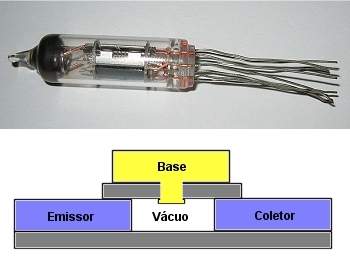
Nanotransístor a vácuo: o retorno das válvulas?


Nanotransístor a vácuo: o retorno das válvulas?
Enquanto as menores válvulas já construídas
mediam algumas dezenas de milímetros,
o nanotransístor a vácuo mede
150 nanômetros.
[Imagem: Site Inovação Tecnológica
/Wikimedia/I.B.Wright]

Era das válvulas
O mundo da eletrônica e dos computadores não nasceu transistorizado: nasceu valvulado.
Os componentes básicos dos primeiros circuitos eletrônicos eram as válvulas termoiônicas, um componente, ou uma série de componentes juntos, lacrados a vácuo dentro de um invólucro de vidro.
Estas válvulas continuam sendo utilizadas até hoje em equipamentos de potência muito alta, como retransmissores de rádio e TV, e em equipamentos de som de alta-fidelidade.
Os transistores as substituíram, inaugurando a era da eletrônica de estado sólido - observe um velho rádio de pilha e você verá escrito nele "solid state" - porque consomem menos energia e são muito menores, o que viabilizou a miniaturização.
Mas os transistores não são melhores do que as válvulas em todos os aspectos.
Transístor valvulado
Agora, um grupo de cientistas da NASA e do Centro Nacional de Nanofabricação da Coreia do Sul está relançando as válvulas eletrônicas em grande escala.
Eles construíram um transístor que funciona no vácuo, inaugurando o que estão chamando de nanoeletrônica a vácuo.
E não foi por mero saudosismo que eles estão reinventando a válvula em nanoescala.
As válvula são mais resistentes a ambientes de alta radiação - como o espaço - do que os transistores.
E, mais importante, os elétrons viajam mais rapidamente no vácuo do que através de um sólido semicondutor.
Ou seja, as válvulas são um meio intrinsecamente melhor quando o assunto é lidar com a eletricidade.
Nanotransístor a vácuo
O problema das válvulas é que elas eram grandes e consumiam quantidades enormes de energia, esquentando tanto quanto uma lâmpada incandescente.
O nanotransístor a vácuo não sofre desse problema: com seus 150 nanômetros de largura, ele dissipa pouquíssimo calor.
A tensão de operação do protótipo de "transístor-válvula" é de 10 volts - pouco em relação às válvulas, mas elevado em relação aos transistores.
Mas os cientistas afirmam em seu artigo que esperam fazê-lo operar com 1 volt em um futuro próximo, o que o tornaria definitivamente competitivo com a tecnologia semicondutora atual.
Eles afirmam que o componente é talhado para aplicações em equipamentos de imageamento médico e telecomunicações de alta velocidade, além de aparelhos mais robustos para áreas agressivas, como indústrias químicas e nucleares, ou no espaço.
Bibliografia:

Vacuum nanoelectronics: Back to the future? Gate insulated nanoscale vacuum channel transistor
Jin-Woo Han, Jae Sub Oh, M. Meyyappan
Applied Physics Letters
Vol.: Published online
DOI: 10.1063/1.4717751


Fonte: Inovação Tecnológica

Nanotechnology Research around the world. This week: Brazil


banner 07122011
The National Laboratory of Synchrotron Light LNLS www.lnls.br is located in Campinas (South Brazil), together with the University of Campinas UNICAMP (Brazil),www.unicamp.br. 

Professor Fernando Galembeck of the Institute of Chemistry at
 UNICAMPhas played a leading role in the development of nanotechnology research strategy in Brazil.
Brazil was one of the first developing countries to build a synchrotron light source. The National Laboratory of Synchrotron Light Source (LNLS) was open to Brazilian and international users in 1997, providing then with a so-called second generation 1.37 GeV/250 mA storage ring and beam lines covering most of the important areas of experimental science with synchrotron radiation – an important improvement in the conditions for developing research of international level for the region.
During the last 15 years the world has witnessed fast advancements in the applications of synchrotron radiation to scientific and technological activities: new disciplines became active users of this tool, pushing the evolution of its technology. The synchrotron radiation sources of third generation are thousands of times more brilliant than the previous sources, allowing for many breakthroughs in experimental techniques. If Brazil is to keep its pace of development its important, among many other actions, to keep updated in such an important area, to help the country to improve its competence in strategic areas such as nanoscience, molecular biology, advanced materials, energy, etc.
LNLS has been working in the design of a new synchrotron radiation source (Sirius) since the beginning of 2009, with brilliance comparable to those in planning or construction phases around the world. The design also includes some innovations in order to reduce investment and operational costs. The planned result is considered to be an important tool for the development of the country.
More information:
National Laboratory of Synchrotron Light LNLS
University of Campinas UNICAMP
Caixa Postal 6192; CEP 13083-970; Campinas – SP lnlscomunica@abtlus.org.br http://www.lnls.br/ 

Fonte: NanoBugle

MIT’s Freaky Non-Stick Coating Keeps Ketchup Flowing

Austin Carr
MIT’s Freaky Non-Stick Coating Keeps Ketchup Flowing

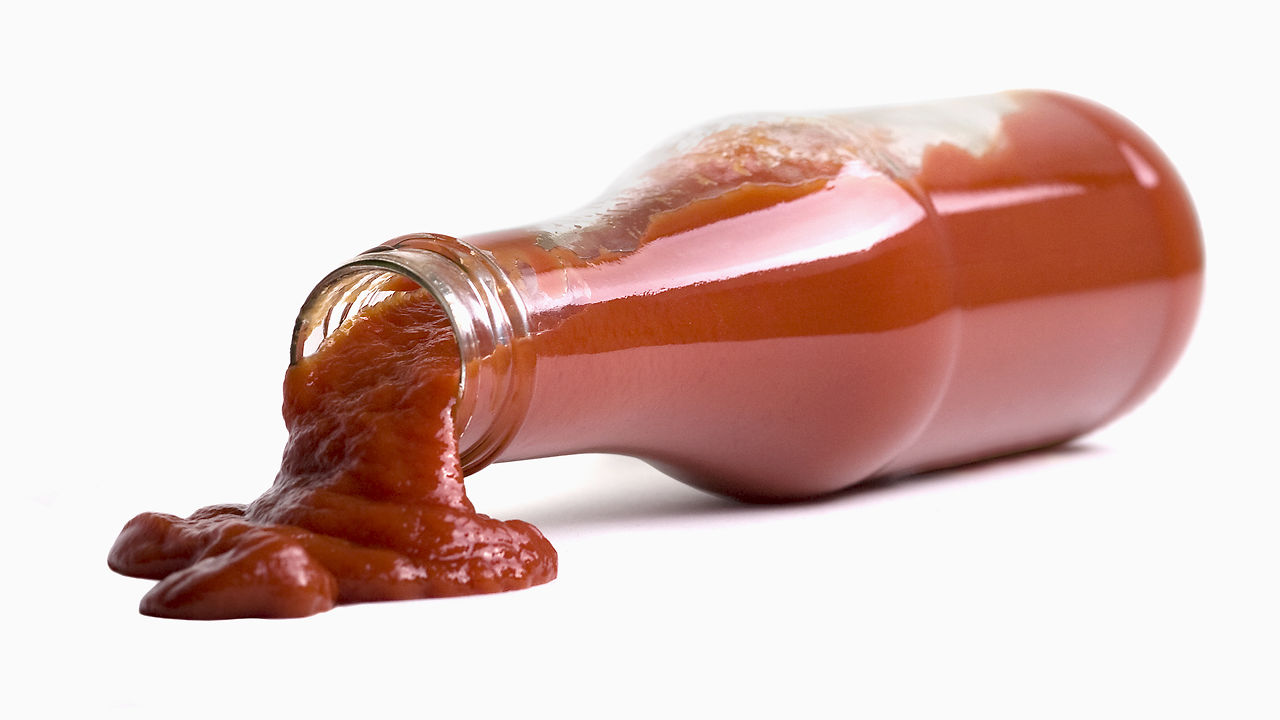
Watch never-before-seen videos of an amazing new condiment lubricant that makes the inside of bottles so slippery, nothing is left inside. This means no more pounding on the bottom of your ketchup containers--and a lot less wasted food.

When it comes to those last globs of ketchup inevitably stuck to every bottle of Heinz, most people either violently shake the container in hopes of eking out another drop or two, or perform the "secret" trick: smacking the "57" logo on the bottle’s neck. But not MIT PhD candidate Dave Smith. He and a team of mechanical engineers and nano-technologists at the Varanasi Research Group have been held up in an MIT lab for the last two months addressing this common dining problem.
The result? LiquiGlide, a "super slippery" coating made up of nontoxic materials that can be applied to all sorts of food packaging--though ketchup and mayonnaise bottles might just be the substance’s first targets. Condiments may sound like a narrow focus for a group of MIT engineers, but not when you consider the impact it could have on food waste and the packaging industry. "It’s funny: Everyone is always like, 'Why bottles? What’s the big deal?' But then you tell them the market for bottles--just the sauces alone is a $17 billion market," Smith says. "And if all those bottles had our coating, we estimate that we could save about one million tons of food from being thrown out every year."
Check out what happens when you pour ketchup out of a LiquiGlide-coated bottle:

For point of reference, here’s ketchup coming out of a regular bottle. Keep in mind, this is the exact same ketchup. It’s so time-consuming and wasteful.
As Smith describes it, LiquiGlide is a surface that’s unique because it’s "kind of a structured liquid--it’s rigid like a solid, but it’s lubricated like a liquid." It works with many types of packaging--glass, plastic--and can be applied in any number of ways, including spraying the coating onto the inside of bottles. Now, thick sauces that would normally move like sludge seem to just fall out of LiquiGlide-coated bottles, as if they were suspended in space. "It just floats right onto the sandwich," Smith says.
One of the most significant challenges his team faced was making sure the coating was food safe, meaning his team could only work with materials the FDA had approved. "We had a limited amount of materials to pick from," Smith says. "I can’t say what they are, but we’ve patented the hell out of it."
Here’s mayo coming out of the coated bottle:

Originally, Smith’s team, which has been working for years now on developing various types of surface coatings, was pursuing different aims. "We were really interested in--and still are--using this coating for anti-icing, or for preventing clogs that form in oil and gas lines, or for non-wetting applications like, say, on windshields," Smith says. "Somehow this sparked the idea of putting it in food bottles. It could be great just for its slippery properties. Plus, most of these other applications have a much longer time to market; we realized we could make this coating for bottles that is pretty much ready. I mean, it is ready." As you can see.
Ironically, if LiquiGlide is a success, it will just mean Smith has to pound even more bottles of ketchup the old-fashioned way. He still has to perform the annoying task in product demos, to show a comparison between the LiquiGlide-sprayed bottles that work and the traditional bottles that don’t. "It was never really a personal pain point for me, but I do hate struggling to get sauce out of the bottles," Smith says, laughing. "I didn’t know about the tapping of the '57' until I started looking into this. It was all news to me."
But he’s already close to experiencing the sweet taste of victory: Last week, LiquiGlide came in second place, out of 215 teams, in MIT’s $100k Entrepreneurship Competition. His team also took home the audience-choice award.
Smith is now in talks with a few bottle companies to market LiquiGlide, though nothing is official yet. It’s still early. The team hasn’t even come up with its own company name, nor been incorporated yet. And their lab is still a complete mess.
"We have all types of sauces, jellies, and jams everywhere in our lab," Smith says. "It’s like a closet full of condiments."
Fonte: Co.EXIST


International Study Reveals Nano Companies' Inconsistent Safety Practices


The "Journal of Nanoparticle Research" has published a study by IRG3 researchers reporting findings from an international survey of nano industry safety practices. 
Nanomaterials companies in 14 countries responded to the survey. The study  found that a majority of companies cited “lack of information” as a significant impediment to implementing nano-specific safety practices. 
Study findings indicate that health and safety guidance is not reaching industry effectively, and suggest that that a more top-down approach from regulators may be needed to protect both workers and the environment.
A pdf version of the full paper is available by clicking on the title below. 
By Cassandra D. Engeman, Lynn Baumgartner, Bejamin M. Carr, Allison M. Fish, John D. Meyerhofer, Terre A. Satterfield, Patricia A. Holden and Barbara Herr Harthorn
Author Information
C. D. Engeman
Department of Sociology, University of California, Santa Barbara, Santa Barbara, CA 93106, USA

C. D. Engeman T. A. Satterfield B. H. Harthorn
NSF Center for Nanotechnology and Society, University of California, Santa Barbara, Santa Barbara, CA 93106, USA

C. D. Engeman L. Baumgartner B. M. Carr
A. M. Fish J. D. Meyerhofer T. A. Satterfield
P. A. Holden B. H. Harthorn
UC Center for the Environmental Implications of Nanotechnology (UC CEIN), University of California, Santa Barbara, Santa Barbara, CA 93106, USA
L. Baumgartner B. M. Carr A. M. Fish
J. D. Meyerhofer P. A. Holden
Donald Bren School of Environmental Science and Management, University of California, Santa Barbara, Santa Barbara, CA 93106, USA

T. A. Satterfield
Institute for Resources, the Environment, and Sustainability, University of British Columbia, AERL, 2202 Main Mall, Vancouver, BC V6T 1Z4, Canada

B. H. Harthorn
Departments of Feminist Studies, Anthropology and Sociology, University of California, Santa Barbara, Santa Barbara, CA 93106, USA