Speed read
- Congress has rejected a bill to label food and drugs containing nanotech
- Yet a US$186 million nanotechnology initiative was launched last month
- A new bill is pending, which may introduce what some see as badly needed regulation
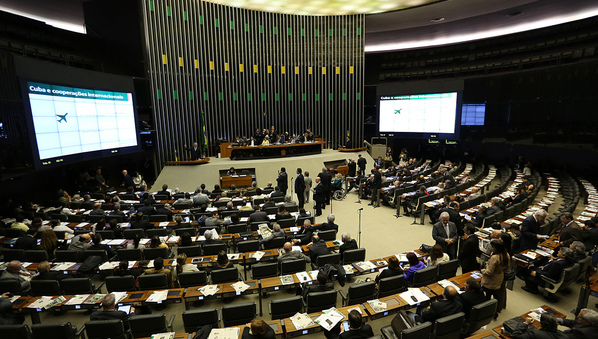 [RIO DE JANEIRO] The Brazilian Congress has rejected a bill that aimed to introduce labelling on all food, drugs and cosmetics containing nanostructures, arguing that it was alarmist and that there was no scientific basis for warning people about nanotechnology in products.
The move is the latest rebuff to such regulation, even as the country spearheads multimillion-dollar nanotechnology programmes and experts argue that better oversight of this new technology could benefit both industry and consumers.
A Senate report on the rejected bill said that the proposed labelling could have been interpreted as a "warning" even on products improved by nanotechnology, potentially causing losses to companies that have invested in improving their products through this technology.
Consequently, there could be a fall in research and development investment in the sector, which would undermine national investment into nanotechnology such as the National Nanotechnology Programme, a multimillion-dollar initiative launched in 2005, and its extension the Brazilian Nanotechnology Initiative launched last month (19 August) that is worth 440 million reals (approximately US$186 million) by the end of 2014.
The bill's demise marks the second failure to regulate the fast-growing sector: in 2005, a more ambitious bill, with provisions for a national policyon nanotechnology, including labelling, risk assessment and other decisions, was evaluated by the industry, science, and finance committees from Congress's Chamber of Deputies, which found the field to be at too early a stage for legislation.
The benefits of legislation
Meanwhile, some experts argue that regulation would make nanotechnology and its industrial applications more transparent, providing a good basis for advancing research and public support for it.
It would also help guide research and define, evaluate and minimise potential risks to human health and the environment, they say.
The most recently rejected bill was less ambitious than its predecessor, aiming primarily to introduce product labelling.“Regulation ... would bring only benefits to industry, trade, scientists and society.”
Edson Duarte, former
member of the Chamber of DeputiesFirst presented to Congress's Senate in May 2010, the bill proposed changing existing laws to incorporate products made using nanotechnology, based on the argument that consumers have the right to know exactly what is in things they buy.
Just as genetically modified foods have to be labelled in some countries, the bill would have forced firms to label any foods, drugs and cosmetics containing nanotech.
But two of the Senate's commissions — for social affairs and for the environment and consumer protection — that reviewed the proposal said there was no scientific basis for imposing "warnings" over nanotechnology's use.
The senators added that the labels were not sufficient to inform consumers, who could be confused and then avoid what could actually be "improved products".
This "alarmism" would harm companies that have invested in nanotechnology and halt plans for the sector's development in the country, they said.
But the author of 2005 bill, which was rejected for similar reasons, says this reasoning is misguided.
"My bill was rejected on the grounds that it could inhibit research and development of new products. It is an absolutely misguided justification," says Edson Duarte, former member of the Chamber of Deputies. "Regulation would serve to establish a minimum level of control over the sector and would bring only benefits to industry, trade, scientists and society."
Further legislation
The Senate may soon have another stab at legislating on the issue: a new bill, proposing the creation of a labelling law for all nanotech products, including imports and exports, is pending in the Chamber of Deputies.
Instead of changing existing laws on foods and drugs to include the labelling of anything made using nanotechnology, as the recently rejected bill attempted, the new proposal would encompass labelling all products containing nanotech, without requiring other laws to change.
"We are confident that our proposal will be approved," says José Sarney Filho, the new bill's author and a representative in the Chamber.
In his view, the business sector is becoming more aware of growing consumer pressure for information and is less resistant to labelling regulations, both of which may help convince senators to approve the bill. The bill was favourably reviewed by the Committee for Economic Development, Industry and Trade, in the Chamber of Deputies, last month.
But Duarte says that a remaining obstacle for nanotech regulation in Brazil is opposition by free-market groups. "These are the ones who can hamper regulation and press [Congress] not to create laws for industry," he says.
Duarte is worried about nanotechnology advancing rapidly with no regulation.
Yet Oswaldo Luiz Alves, a nanotech expert at the State University of Campinas and a member of the Ministry of Science, Technology and Innovation's Advisory Committee on Nanotechnology, says the time lag between big investment in a new technology and its regulation is not unique to the nanotech sector.
"This situation has been happening with many technologies. Even in developed countries, regulation came in second," he says.
Despite the setback of the bill's rejection, Alves believes the situation is now favourable to advancing nanotechnology regulation in Brazil, especially as the nation's new nanotechnology initiative gets under way.
"But we need to consistently move forward with the right steps and, above all, in harmony with the international context so that we do not create situations that prevent us from participating, as effective actors, in the trillion-dollar economic activity of nanotechnology," says Alves.
Link to the senators' report on the rejected bill (in Portuguese)
Link to the newly proposed labelling bill (in Portuguese)
Link to the 2005 rejected bill (in Portuguese) .Fonte: SciDev________________________________________RELEMBRANDO
A base para este texto eu trouxe neste dois posts abaixo em que dediquei um longo apanhado de informações a fim de explicar a rejeição do Senado.
E o texto da SciDev Net se baseou neles.
1) http://nanolei.blogspot.com.br/2013/08/senado-federal-tramitacaosituacao-do.html
Senado Federal: TRAMITAÇÃO/SITUAÇÃO do PLS nº 131 de 2010
2) http://nanolei.blogspot.com.br/2013/08/senado-federal-analise-da.html
Senado Federal: ANÁLISE DA REJEIÇÃO/ARQUIVAMENTO DO PLS nº 131 de 2010

quarta-feira, 11 de setembro de 2013
Brazil struggles to regulate emerging nanotechnology


segunda-feira, 9 de setembro de 2013
ACONTECEU: UFPR - Workshop Internacional Nanotecnologia e Sociedade na AL
Por: André Luiz Aguiar*
Apresento aqui uma síntese do que e o que falaram os participantes do Workshop Internacional Nanotecnologia e Sociedade na América Latina ocorrido nos dias 05 e 06 de setembro de 2013 em Curitiba, Brasil, na UFPR.
Como eu participei nos dois dias, apresento o que veiculei diretamente via twitter do blog @NanoLei.
O resumo não expressa o conteúdo denso e completo do debate, mas sim -- como o nome traz -- é um resumo do que aconteceu. E este pode não compreender exatamente as manifestações dos participantes; o que peço desculpas desde já. Fica aberto para ajustes por parte de quem lá esteve e queria contribuir.


*André Luiz Aguiar: advogado formado pela
Pontifícia Universidade Católica do
Paraná (PUC-PR), OAB-PR 60.581,
pesquisador e consultor em
Nanotecnologias e regulamentação
pesquisador e consultor em
Nanotecnologias e regulamentação
quinta-feira, 5 de setembro de 2013
Regulação europeia em nanotecnologia é discutida por especialistas
Empresas precisam aplicar regras de segurança química que assegurem a saúde humana e o meio ambiente
Por ACS/DMS

Na terça-feira, 03/09, das 9h às 12h, no auditório da Fundacentro em São Paulo, ocorreu o Pré-seminário: Nanotecnologia, Sociedade e Meio Ambiente que discutiu a regulamentação legal da nanotecnologia na Europa e os riscos à saúde do trabalhador.
Para abordar o tema foram convidados David Azoulay, gerente do Centro de Direito Internacional Ambiental (CIEL), em Genebra, e Aida Maria Ponce Del Castillo, chefe da Unidade sobre Condições de Trabalho e pesquisadora em saúde e segurança do ETUI (European Trade Union Institute – Instituto Sindical Europeu). A mesa de abertura foi composta por Amarildo Alcino de Miranda, assessor da presidência, pela assessora da diretoria técnica, Solange Schaffer, pela pesquisadora da Fundacentro, Arline Abel Arcuri e pelo coordenador do seminário, Paulo Martins. Amarildo abriu o evento desejando um excelente seminário a todos e elogiando os trabalhos desenvolvidos pela pesquisadora Arline Arcuri relacionados ao tema. Comentou que antes dele vir trabalhar na instituição, a ex-diretora técnica, Dalva Dias salientou que a Fundacentro contribuiu muito na história desenvolvendo ações em prol da segurança e saúde do trabalhador. Disse ainda: “faça e ajude a Fundacentro funcionar, voltar a fazer o que ela sempre fez e pode fazer na área de SST”, explanou o assessor. “Esse seminário é de extrema importância. A Fundacentro tem potencial e um corpo técnico de primeira qualidade. Além disso, a nossa biblioteca é uma das melhores da América Latina - então se nós temos tudo isso – e temos esse potencial para ser explorado, precisamos investir para que a instituição cumpra a sua missão”, finalizou Amarildo. Solange Schaffer agradeceu a presença de todos os participantes, em especial, dos palestrantes David Azoulay e Aida Castillo e desejou um ótimo evento a todos. Após a fala da assessora, Arline explicou que o seminário faz parte de um conjunto de ações que a Fundacentro vem desenvolvendo desde 2006 com a preocupação das novas tecnologias. Com relação à contaminação ambiental “nanopartículas” e as “partículas maiores” produzidos pela poluição ambiental, a pesquisadora informou que esse assunto é bastante preocupante. “Existe um estudo da Universidade de São Paulo que mostra que o dia em que São Paulo tem greve de metrô, os postos de saúde tem um grande atendimento de pessoas com doenças cardiorrespiratórias, fundamentalmente com a liberação de partículas voláteis”, explanou a pesquisadora. O assessor da presidência, em seu discurso também mencionou sobre os impactos dessas partículas, tanto as partículas emitidas pela tecnologia quanto as existentes no ar. Observou que as partículas que respiramos na cidade de São Paulo são bem mais poluídas se comparadas às de Santa Catarina, sua cidade natal – e isso provoca vários danos à saúde. Dando continuidade às atividades, Azoulay, gerente da CIEL iniciou a sua palestra abordando a “Regulação em nanotecnologia – o caso europeu”. A missão da organização onde trabalha é de fortalecer as leis em conjunto com as instituições internacionais para que possam analisar as possibilidades de regulamentação legal da nanotecnologia no que diz respeito ao avanço tecnológico, sobretudo os riscos desconhecidos dessa nova tecnologia. David ressaltou que em cada local da Europa está sobre a regulação das leis. “Há dois anos a Comissão Europeia está discutindo a definição europeia sobre o critério científico adaptado que visa à gestão de riscos ambientais e de riscos à saúde humana”, relatou o gerente. Essa regulação é a Reach (Registration, Evaluation, Authorisaton of Chemicals: registro, avaliação e autorização de substâncias químicas) que desde 2008, informa sobre os perigos voltados para os nanomateriais e as formas em como lidar com os respectivos riscos. Quando a empresa produz ou importa uma tonelada ou mais de uma determinada substância química deve registrar em uma base de dados central da Agência Europeia das Substâncias Químicas (ECHA). Portanto, pela Reach o material deve conter uma tonelada, abaixo disso não cai no escopo da regulação. “Existem três tipos de regulação setorial que tem como objetivo esclarecer à sociedade informações sobre os componentes contidos nos cosméticos, informação alimentar aos consumidores e diretivas dos produtos biocidas. Cada um desses produtos requer regulação específica e no caso do biocida é necessária uma autorização especial antes que seja colocado no mercado”, informou David. Hoje em dia, os nanomateriais são utilizados em muitos produtos de consumo na Europa. A Comissão Europeia entende que é necessária a compreensão do que está no mercado e, por isso, a regulamentação tem que ser efetiva. As empresas precisam aplicar regras de segurança química que assegurem à saúde humana e o meio ambiente. Está em processo de revisão o anexo da Reach. Em 2014 a Comissão fará uma consulta para verificar como ficará o registro para a Europa. A pesquisadora Aida Castillo da ETUI se ocupa em seguir a política europeia em nanotecnologia e desenvolve publicações para o trabalhador. Iniciou a sua apresentação informando sobre a publicação do livreto “Nanomaterials and workplace health & safety: what are the issue for workers” que pode ser consultado nos idiomas inglês e francês no site: http://www.etui.org O livro trata da produção e utilização de nanomateriais nos locais de trabalho, traz como reflexão o impacto sobre a sociedade e a necessidade do quadro regulamentar europeu mais adaptado para o mercado. Castillo disse que os sindicatos, desde 2008, perceberam o crescimento de indústrias na Europa que trabalham com os nanomateriais. Com isso, eles estão preocupados com os perigos que os profissionais que trabalham com esses materiais estão expostos. Enfatizou que antes de colocar uma substância no mercado é preciso que seja verificado e provado que não haja perigo para a raça humana e o meio ambiente. Do contrário, não será permitido a inserção no mercado. “Produto que poderá causar malefício à sociedade e para o meio ambiente não será colocado à venda e, principalmente, os trabalhadores não poderão estar expostos aos nanomateriais”, relatou a pesquisadora. Uma questão levantada por Aida foi relacionada aos trabalhadores que estão expostos aos nanotubo de carvão – esses profissionais deverão ser acompanhados periodicamente por um médico do trabalho. Isso porque os trabalhadores podem sofrer com toxicidade pulmonar do material liberado durante a manipulação. Sobretudo, os nanomateriais podem penetrar no corpo, na via aérea e oral se estiverem na forma de nanopartículas. “A legislação tem que se adaptar ao Reach. Caso contrário, será necessário promover uma legislação especifica. Os sindicatos desejam que seja detalhado o material que o trabalhador está exposto, caso esse produto não seja seguro e sendo seguro tem que ser regulamentado”, explicou Castillo. No final das apresentações abriu-se para o debate. O coordenador do Seminário, Paulo Martins, agradeceu os palestrantes e a todos que participaram do evento. Salientou que o tema será muito discutido e que a troca de informações a respeito do tema é importante. Hoje, 05/09 e amanhã, acontece o evento II Workshop Internacional Nanotecnologia e Sociedade na América Latina, em Curitiba. A quarta edição da história em quadrinhos (HQ) da série Nanotecnologia em Quadrinhos, sobre agricultura estará disponível este mês. Já a quinta edição abordará a Indústria Metalúrgica e, segundo a pesquisadora Arline está em processo de elaboração. Fonte: Fundacentro |
quarta-feira, 4 de setembro de 2013
Tese de Doutorado: Educação não-formal em mídias: Divulgação científica sobre nanotecnologia
Educação não-formal em mídias: Divulgação científica sobre nanotecnologia
Tese de doutorado apresentada ao Programa de Pós-Graduação em Tecnologia da Universidade Tecnológica Federal do Paraná como requisito parcial para obtenção do título de "Doutora em Tecnologia” -
Área de Concentração: Tecnologia e Sociedade.
Orientadora: Profa. Dra. Noela Invernizzi
Data de Emissão: 25-Jun-2013
Campus: Curitiba
Autora: Clecí Körbes
RESUMO:
 |
| Veja completo aqui |
Analisam-se as seções de ciência do programa de TV aberta Bom Dia Brasil e do jornal Folha de S. Paulo no período de 2008 a 2010, e uma amostra não aleatória de 20% dos programas Nanotecnologia do Avesso, programa de entrevistas em webTV, no período de 2009 a 2010.
Observou-se, mediante análise comparativa, que as definições de nanotecnologia variam bastante entre os meios, dependendo de quem as produz e das circunstâncias que levam à sua promulgação e estabilização.
No Bom Dia Brasil e na Folha de S. Paulo o conceito de nanotecnologia enfatiza o artefato material e explicita minimamente sua configuração social por uma rede sociotécnica, aspecto amplamente abordado no Nanotecnologia do Avesso. Todas as mídias descrevem as novas propriedades e funções da matéria em nanoescala, mas diferem na forma de fazê-lo, de acordo com os interesses dos atores relevantes representados: ora salientam o potencial de inovação que tais propriedades geram, ora novos riscos associados a elas.
No Bom Dia Brasil e na Folha de S. Paulo sobressaem expectativas de que tais novas propriedades e funcionalidades redundem em benefícios, tais como produtos mais eficientes para a abertura de novos mercados, avanços na saúde e qualidade de vida e preservação do meio ambiente. Essas visões reproduzem discursos baseados em modelos lineares, como a suposta neutralidade, inexorabilidade e progresso contínuo da ciência e da tecnologia.
No Nanotecnologia do Avesso é proeminente a discussão de potenciais riscos e implicações sociais, legais e éticas da nanotecnologia, e a demanda pela aplicação do princípio de precaução e regulação obrigatória.
Conclui-se que a divulgação sobre nanotecnologia é um processo educativo repleto de tensões e polarizações, que transcende sua especificidade de prática simbólica e se articula com a prática produtiva e social, ora aproximando-se, ora afastando-se da perspectiva de cidadania sociotécnica, de acordo com os modelos de divulgação adotados e os grupos sociais representados nas diferentes mídias.
REFLEXÕES FINAIS
[...]
Nossa investigação mostrou que no Bom Dia Brasil e na Folha de S. Paulo predominam as vozes de pesquisadores das áreas de Ciências Exatas e da Saúde e das Engenharias. Em relação inversa, no Nanotecnologia do Avesso predominam os entrevistados (pesquisadores e não pesquisadores) das Ciências Humanas sobre essas áreas, as Exatas aparecem em segundo lugar, seguidas pela área de Ciências Sociais Aplicadas e Multidisciplinar, em terceiro lugar. Neste programa chama particular atenção uma expressiva participação de atores direta ou indiretamente ligados a movimentos da sociedade civil organizada, como os dirigentes e as assessorias a organizações sindicais, e a participação de docentes da educação básica, ambos atores ausentes das outras mídias analisadas. Reconhecemos, assim, que cada mídia empodera alguns grupos (ou nós) da rede sociotécnica que constitui a nanotecnologia.
[...]
Os campos de tensão são justamente os três planos da existência humana anteriormente discutidos, a prática produtiva, social e simbólica, terrenos de luta pela hegemonia. Nesse sentido, o programa Nanotecnologia do Avesso está mais articulado à perspectiva de cidadania sociotécnica, pois busca fomentar o engajamento público para um trabalho produtivo com segurança para o trabalhador, os consumidores e o ambiente, para a participação cidadã ativa na discussão da tecnologia, e para a socialização e apropriação de saberes e conhecimentos que possam fundamentar a prática social e produtiva.
Os meios de comunicação de massa convencionais, por sua vez, aparecem mais alinhados com a Política Nacional de Nanotecnologia, cujas ações de divulgação científica têm estado orientadas ao mundo empresarial e que enfocam a prática produtiva sobre as demais práticas que integram a existência humana.
Contraditoriamente, o discurso das políticas públicas e algumas das suas ações começam a apontar para práticas produtivas, sociais e simbólicas mais inclusivas.
Concluindo, na divulgação científica é preciso aprimorar a abordagem dos conceitos de ciência e tecnologia em uma perspectiva sociotécnica, para superar as visões ingênuas, paralisadoras e conservadoras de neutralidade e autonomia da ciência e tecnologia. Acreditamos que essa mudança depende em boa medida da abordagem de ciência e tecnologia que perpassa a formação formal e não-formal dos diversos profissionais. Concomitantemente, a diversidade de mídias e o engajamento público se revelou nessa tese como um caminho fundamental para a construção de uma prática simbólica no campo da educação não-formal em mídias que se articule organicamente com a prática social e produtiva para a inclusão social, pois como toda prática simbolizadora, a educação não-formal não é uma práxis neutra.
Fonte: Repositório Institucional da UTFPR
What you need to know about nano-food
Katharine Sanderson answers the big questions about the tiny technology on its way to your plate
 Mayonnaise is an emulsion of tiny particles, and researchers are developing techniques that allow these tiny droplets to be precisely tailored, to give them specific tastes or textures. Photograph: Philippe Desenrck/Getty Images
 A scientist with a master for the production of micro screens for use in the foodstuffs industry. Photograph: Ulrich Baumgarten
 Until recently, industry has not been required to label products containing nanomaterials. But that is changing. Photograph: Cultura/Bret Stevens/Getty Images
 |
| A variety of nanotechnology to be used in food is in development, and a few products have hit the market. Photograph: px photography/Getty Images |
What are the practical applications of nano-foods?
Nanotechnology is the science of the very, very small. Measured in billionths of a metre, nanoparticles are similar in scale to viruses, proteins and antibodies. You could fit thousands of nanoparticles inside just one of your red blood cells, leaving ample room to spare.
Manipulating food at this scale could help to develop lower-fat foods that still taste great, or allow manufacturers to pack more nutrients into otherwise vitamin-free foods. This technology should not necessarily be alarming, because the human body is already used to dealing with nanoscale food. Our guts break what we eat down to nano-sized chunks so that the body can absorb nutrients in the intestine, for example.
Nanotechnology is also poised to create better food packaging. It could reduce the amount of plastic used, for example, or make containers smarter by building in sensors that tell us whether the food inside is still fresh.
The food industry has unwittingly been using nanotechnology for years. Mayonnaise is an emulsion of tiny particles, where oil and water are forced to mix together without separating. But researchers are now developing techniques that allow these tiny droplets to be precisely tailored, to give them specific tastes or textures. Mayonnaise stays thick and creamy because "there are so many fat droplets that they divide the water into pockets", says Kathy Groves, a microscopist at contract research company Leatherhead Food Research in the UK. That means it is typically 70% fat – far from ideal if you're on a diet.
One way to reduce the fat content below 40% is to add more water, plus some starch to make sure the mayonnaise does not become too runny. But an altogether tastier approach is to manipulate the droplets' structure on the nanoscale. Groves and her colleagues are developing techniques to replace the insides of the fat droplets with water, creating an emulsion that has the same texture, but less fat than the real thing.
Researchers are also developing nanometre-sized grains of salt, roughly a thousand times smaller than normal table salt. Carving up a grain of salt into these smaller particles increases its surface area a million-fold, which means that your food needs far less salt to give your taste buds the same savoury kick. That could be a boon for those who, worried about high blood pressure, are trying to reduce their salt intake.
As for packaging, nanotech is already being used in the US to stop beers going flat. Plastic beer bottles used by brewer SABMiller contain flaky nanoparticles of clay, which fill up much more space in the walls of the bottle than molecules of plastic. That makes it much harder for fizzy carbon dioxide to escape from the beer – or for oxygen, which can spoil the beer's flavour, to get in. In future, smart nano-packaging might be able to change colour if it detects the gases given off by spoiling food, allowing consumers to make informed decisions about what's safe to eat.
Why would I eat nano-food?
Mayonnaise is an emulsion of tiny particles, and researchers are developing techniques that allow these tiny droplets to be precisely tailored, to give them specific tastes or textures. Photograph: Philippe Desenrck/Getty Images
A variety of nanotechnology to be used in food is in development, and a few products have hit the market. But experts say that the traditionally conservative food industry is unlikely to adopt nanotechnology on a large scale unless it has compelling benefits for their business or their customers.
One of the main uses could be to deliver more vitamins and minerals through the food we eat. Nanoparticles could encapsulate vitamin supplements, which could be added to everyday foods such as bread.
Essential minerals could get the same treatment. "We're working to make nano-based iron supplements that are safe and side-effect free," says Jonathan Powell, head of biomineral research at the Medical Research Council's Human Nutrition Research centre in Cambridge, UK.
There is growing evidence that the body stores iron as solid, insoluble nanoparticles that are only broken down into useful atoms once they get inside our cells. Supplements containing iron in a soluble form can be toxic in very high doses, because they damage the gut. Powell wants to sneak iron directly into cells in their insoluble, nanoparticle form – piggybacking on the body's natural route – to make a more effective supplement.
Powell has also been investigating the health impacts of nanoparticles that are foreign to the body. Nanoparticles of titanium dioxide are commonly used in sun creams, where they screen out harmful ultraviolet rays. Powell has found that if titanium dioxide nanoparticles get inside the body, they can accumulate in parts of the small intestine used by our immune system. Although the health implications of this accumulation are not understood, Powell thinks that manufacturers should steer clear of using nanoparticle additives that do not have a clear benefit.
So where do nanoparticles end up if the body cannot break them down?
Researchers are just beginning to address that question. The UK's Food Safety Authority (FSA) has been running two projects that look specifically at what happens when nanoparticles are ingested and results are due in the next few months.
Sandy Lawrie, head of novel foods at the FSA, hopes the research will help companies planning to use nanotechnology test the safety of their products.
Aside from these studies, there is relatively little toxicology data on ingested nanoparticles, although that doesn't necessarily mean that the nanoparticles are dangerous, says Lawrie.
Who makes nano-food?
A scientist with a master for the production of micro screens for use in the foodstuffs industry. Photograph: Ulrich Baumgarten
Try to find out the details of what food companies are doing with nanotechnology, and you're likely to draw a blank. "The application of nanotechnologies in the food industry is at an early stage, and to the best of our knowledge the UK food and drink manufacturing industry does not currently use engineered nanomaterials in food products, their processing or their packaging." So says the UK's Food and Drink Federation, which represents food manufacturers.
Nestlé says that it is keeping a watchful eye on developments in food nanotechnology, but not doing any of its own research. Heinz takes the same line, saying that it is monitoring the field but not actively participating.
It was a rather different story back in 2005, when industry analyst Mark Bünger, a research director at Lux Research in San Francisco, California, attended the World Food Technology and Innovation Conference in Dublin, Ireland. In a report from the meeting, he wrote: "We talked with companies ranging from Unilever to startup Derevo about nanotechnology's applications in the food industry at every stage of the nanotech value chain."
Why have companies become so coy since then? Bünger suggests that it may reflect a genuine decline in interest, perhaps due to regulatory challenges. He expects that the nanotechnologies used to deliver food supplements, for example, will first make their way into medical applications, an arena where new products go through more rigorous testing.
This is backed up by figures from the Project on Emerging Nanotechnologies at the Woodrow Wilson International Center for Scholars in Washington, DC. In its inventory of more than 1,000 commercial products that contain nanoparticles, just five are listed in the food category.
But David Carlander, director of advocacy for the Nanotechnology Industries Association (NIA), based in Lisbon, Portugal, suspects that companies may be doing more work on nanotechnology than they are prepared to admit. "I think this is how several large corporations are acting, and the amount of 'monitoring' they do may in practice be quite substantial," Carlander says.
In 2010, the House of Lords committee on science and technology conducted an in-depth investigation of nano-food, and its report criticised the food industry for its secrecy on the subject. And last year, the Food and Agriculture Organization of the United Nations issued a report on food and nanotechnology which raised similar concerns about a lack of transparency about what the food industry was doing with nanotechnology.
Sandy Lawrie, head of novel foods at the UK's Food Standards Agency, says they encourage companies to come to them with information about what they've developed, but so far there have only been a "small number of enquiries" from companies developing new foods using nanotechnology. For all the promise of nano-foods, he adds, "there's a lot of talk about it but very few products to show for it".
Where does nano-food come from?
Some nano-structures occur naturally in food; others can be added by food manufacturers. But there's another way that nanotechnology can get into the food chain – from the ground up. At Clemson University in South Carolina, food biologist Jeremy Tzeng is using nanotechnology to tackle the problems that can be caused by feeding antibiotics to animals. The routine use of antibiotics in animal feed is banned in Europe, because microbes are becoming increasingly resistant to these essential drugs. This may, in turn, make human infections harder to treat.
Tzeng is developing nanoparticles that could take the place of these antibiotics in chickens. The particles bind to bacteria and then clump together, passing through the chicken along with other fecal matter. So far, the polystyrene-based particles he uses don't seem to cause the chickens any distress or weight loss, but there are still important issues to address. "Our concern is what the nanomaterial's impact is on the environment," Tzeng says.
That's not the only way that nanotechnology could be used on the farm. "Nanotechnologies are used to make various pesticides", says Kai Savolainen, director of the Nanosafety Research Centre at the Finnish Institute of Occupational Health in Helsinki, bringing with them a range of benefits. "They have a better ability to stick where they're supposed to – to roots, or leaves, or to weeds," he says.
Fertilisers can be delivered in nanoparticles that deliver the essential nutrients more efficiently. When conventional Fertilisers are applied to a field, more than half of the nitrogen they contain leaches away through the soil, or is lost in to the air, says nanotechnology researcher Maria DeRosa from Carleton University in Ottowa, Canada. Not only do crops miss out on their feed, this also increases nitrogen pollution that can cause unwanted algal blooms in waterways. Using Fertilisers in the form of nanoparticles could make it much easier for plants to absorb, drastically cutting down on the amount that farmers need to put on their fields. This could have other spin-off benefits – roughly 1% of the world's energy output is currently used to make fertilizer, so cutting back could reduce the greenhouse gas emissions the process creates.
Adding nanoparticles of titanium dioxide to Fertilisers could help to break down unwanted bacteria, while other nanoparticles have been used to slowly release chemical compounds that regulate plant growth, DeRosa adds.
Is it safe?
Until recently, industry has not been required to label products containing nanomaterials. But that is changing. Photograph: Cultura/Bret Stevens/Getty Images
In Europe, the arrival of genetically modified (GM) foods in the 1990s triggered a public relations disaster that has effectively closed the industry down. Nanotech advocates are desperate to avoid being tarred with the same brush.
"The parallels are undeniable," says Kathy Jo Wetter, who works on nanotech issues with the ETC Group, a campaigning organisation interested in technology's impact on health and the environment. "Products have been rushed to market without proper assessment and virtually no public discussion."
But even if they wanted to, food companies are not allowed to use clever new nanotechnologies in their products without regulatory approval. "Despite some earlier concerns that the use of nanomaterials in food was essentially unregulated, it is clear that nanotechnologies in food are regulated," says Diana Bowman, an expert in risk and public health at the University of Michigan.
All foods that include nanomaterials, or are processed using nanotechnology, fall under the same regulations as conventional food. The next challenge, which Bowman says hasn't yet been addressed, is to find out how effective existing regulatory frameworks are for looking at any novel effects associated with nanotechnologies. "This is still an open, and highly debated, question," Bowman says.
Until recently, industry has not been required to label products containing nanomaterials. But that is changing. The European Union recently introduced new regulations for cosmetics and food labelling, says Bowman. From the end of 2014, it will become a legal requirement to clearly label food products that contain nanomaterials – although the regulations do not cover manufacturing processes.
It's a move in the right direction, says Kai Savolainen, director of Nanosafety Research Centre at the Finnish Institute of Occupational Health. He says he is concerned that right now, food producers do not have to declare specifically whether they use nanotechnology. "I feel I should have the right to know what I put in my mouth," he says.
Savolainen says that while he doesn't anticipate any major risks from nanofoods, more safety studies that look specifically at ingesting nanoparticles are needed. "There are thousands of nanosafety studies, but very few of them can be used for risk assessment," he says.
European regulators are also trying to ensure that nanotechnology does not become the next GM. Forthcoming regulations on the oversight of novel foods are being rewritten to incorporate checks and balances for nanotechnology.
Bowman says that it is vital to investigate and debate the use of nanotechnologies in food now, rather than waiting until there is a consumer backlash. "Countries such as the US, the UK, the European Union more generally, Australia and New Zealand have been extremely proactive in examining the effectiveness of their regulatory frameworks for dealing with nanotechnologies," she says.
Fonte: The Guardian
Nanotech's Sunday best
Amidst fears of nanobots crawling under our skin, or "grey goo" infiltrating our world, there are some areas where consumers are happily embracing nanotechnology
 |
| Hi-tech sports kit is the most-likely place to see nanotech innovations – amateur sportsmen buy into technology if they think it will make them perform better, or be more comfortable. Photograph: Meckes + Ottawa |
Water-resistant jackets, wrinkle-free shirts, stain-resistant ties (handy for amateur chopstick users), running kit that wicks sweat away, socks that don't smell – all these widely available smart fabrics owe many of their eminently marketable properties to nanotechnology.
Take non-stinking socks. Silver's antimicrobial properties – its positively charged ions kill bugs – have been known for many years. Silver nanoparticles are so tiny that they have no effect on the feel of a fabric, meaning nanosilver-containing socks will be no harsher on your feet than others, despite releasing ions to kill the bugs that produce the stink.
Water-resistant and stain-resistant fabrics imitate the lotus plant's ability to repel water and clean itself. Adding nanoparticles changes the angle that the surface of a water or fat droplet makes with the fabric. If this angle is altered enough, surface tension in the droplet stops it spreading out and soaking into the fabric.
Hi-tech sports kit is the most-likely place to see nanotech innovations – amateur sportsmen buy into technology if they think it will make them perform better, or be more comfortable. But that kit could also keep you safe. Cambridge, Massachusetts-based company MC10 and Reebok are developing a cap for NFL players to wear under their helmets that uses sensors made from nanofibres of silicon to measure whacks to the head. MC10 also offer a device that looks like a sticking plaster to track how hydrated you are – sending an alarm to your smart phone to tell you when it's time to take on water.
Tim Harper, from Birmingham, UK-based research and consulting company Cientifica, thinks that clothes as devices will be the next big thing for nanotechnology-based textiles. "We're going to see a lot more wearable electronics," he says.
Much of this technology is being developed in the military, to protect soldiers on active duty. Researchers at the US Army Research Institute of Environmental Medicine in Natick, Massachusetts, are developing equipment to allow a soldier's heart rate, breathing and temperature to be monitored remotely.
Stephen Fossey, a materials engineer at the neighbouring US Army Natick Soldier RD&E Center is making fibres just a few hundred nanometres in diameter to weave into fabrics. "Progressively smaller fibres are progressively more supple," Fossey says, "so you get a fibre that is very strong but more comfortable." These materials, he hopes, might find a use in anti-ballistic clothes.
To have a piece of clothing that acts as some sort of device, whether a sensor, in-built phone or computer, those fabrics need one crucial property – electrical conductivity. Here is where carbon nanotubes might have a starring role, says Fossey.
Carbon nanotubes – tubes of rolled up one-atom-thick carbon sheets – are extraordinary electrical conductors. If they can be incorporated into clothing, the addition of other nano-sized devices could allow a fully wearable communications centre to be made.
Filip Govaert at Centexbel, a non-profit textiles research centre in Belgium is using carbon nanotubes in fibres and textile coatings. Govaent's team is exploiting this conductivity to make anti-static clothes for people working in microelectronics manufacturing, preventing workers becoming electrically charged during their work. Anti-static materials with carbon nanotubes are also used as mattress covers in operating theatres, to make sure the large charges used in defibrillators are grounded safely, Govaert says.
Safety is always quickly mentioned when any nanotechnology is touted. Concern that nanoparticles might be leaching into the human body from some of these smart fabrics prompted Natalie Von Götz at ETH Zurich to simulate a worst-case scenario for a range of commercially availablenanotech clothes, including t-shirts and trousers laced with nanosilver, as well as UV-resistant t-shirts made with nanoparticles of titanium dioxide – commonly used in sunscreens.
Her test involved spinning these clothes around in a washing machine, sealed in a tube with artificial sweat solutions. She found that the titanium-dioxide clothes caused no concern – very little titatnium dioxide came out of the clothes. But nanosilver was different. Von Götz found both dissolved and particulate silver in the sweat after its workout in the washing machine.
However, toxicologists aren't that concerned about silver, she adds. Andrew Maynard, director of the Risk Science Center at the University of Michigan School of Public Health, says there isn't too much cause for concern. "We do know that silver is not highly toxic to humans and healthy skin is a strong barrier, so the study doesn't throw up too many red flags," he says of Von Götz's study.
But the question remains how much silver, on the nanoscale, can be taken up by the skin, and what happens if it gets into the body. This question has not been addressed adequately in safety tests, Von Götz says. Maynard agrees: "More attention needs to be paid to exposure to silver ions in particular through these products."
Harper agrees that while most nanomaterials used in textiles are covered by existing regulations, there is very little life-cycle analysis specific to those textiles available. Nevertheless, nanotech and clothing look set to continue to thrive together. "There's always a lot of interest from the textile industry in nanotechnologies," says Harper. And that's going to increase, he predicts, as consumer electronics go nano, and collide with smart textiles.
So before long, your scruffy old running kit might have morphed into a super-hero nanotechnology-enhanced suit: heart-rate monitor, music system, nutrition guide and map, all in one simple fresh-smelling, wrinkle-free t-shirt.
Fonte: The Guardian
sexta-feira, 23 de agosto de 2013
Tese de Doutorado: Nanociências, Nanotecnologia: uma visão desde seu nascimento até apresentação das temáticas à sociedade
Nanociências, nanotecnologia : uma visão desde seu nascimento até apresentação das temáticas à sociedade
 |
| Veja completo aqui |
Autora: Magda Suzana Novo
Resumo
Nesse estudo foi realizado um recorte utilizando como critério as palavras-chave relacionadas à Biologia e à Saúde elencadas nas matérias, das revistas Veja e Scientific American, publicadas de junho de 2009 a junho de 2010. Para obter um padrão de relacionamento entre as palavras usadas na base de pesquisa, utilizou-se o programa Citespace, o qual mostra a relação entre os tópicos utilizados, bem como momentos de explosão e ruptura dos temas. A interpretação das tabelas e gráfico obtidos permitiu concluir que trabalhos sobre essa temática surgiram de forma significativa a partir da década de 80, embora explosões e rupturas sejam observadas após 1991. Ao ter o olhar voltado para as áreas biológicas e da saúde constatou-se que trabalhos referentes a essas aparecem após 2006, estando em sua maioria relacionados à nanomedicina.
Há um aumento no número de trabalhos sobre nanotoxicologia a partir de 2007, o que pode ser considerado um fato natural devido a amplas pesquisas visando à aplicação nano em seres humanos. Num segundo momento da pesquisa, partindo das publicações científicas, passou-se a analisar a inserção da temática na educação informal. Considerando que as revistas, Veja e Scientific American, têm dentre seus objetivos levar novidades científicas para a sociedade, realizou-se um acompanhamento das matérias sobre nanociências e nanotecnologia divulgadas nessas mídias, no período de junho de 2009 a junho de 2011, com o objetivo de levantar e caracterizar a divulgação científica promovida pelas referidos artefatos culturais nessas áreas. No acompanhamento das reportagens foram consideradas as seguintes variáveis: número de artigos publicados, conteúdo da reportagem e área do conhecimento envolvida, fontes de informação utilizadas, benefícios e riscos da utilização da nanotecnologia. Os resultados obtidos demonstram que ambas as revistas, apesar de apresentarem somente o lado positivo da utilização da nanotecnologia, desempenham papel importante como meio de educação informal, uma vez que fazem a divulgação dos avanços científicos nesta área. Numa terceira etapa do estudo, realizou-se uma enquete com professores da educação básica participantes do curso de extensão on line, intitulado “Além do livro didático: nanociências, nanotecnologia e nanotoxicologia”, oferecido através da plataforma moodle da FURG. O corpus da pesquisa emergiu das respostas produzidas pelos docentes. Este artigo objetivou investigar e analisar o conhecimento que esses profissionais possuem sobre esses temas, bem como as fontes desses conhecimentos e com que finalidade buscam esse tipo de informação. Os resultados apontam que apesar de possuírem um conhecimento inicial, os conceitos são muitas vezes equivocados e /ou insuficientes e que o contato com o assunto ocorreu principalmente através de artefatos culturais.
Finalmente, articulando os resultados alcançados ao longo do estudo, é possível defender a tese de que a divulgação informal de temas relacionados às nanociências e nanotecnologia, apesar de estar diretamente relacionada com as novidades científicas na área, não está dando conta, de forma apropriada, de disseminar esses conhecimentos para a sociedade, fazendo-se necessária a exploração dessas temáticas na educação formal. Para que isso aconteça é preciso promover a atualização docente nesse campo de estudo. Nesse sentido, para que a educação em ciências avance, aponta-se a necessidade de investir em cursos de formação continuada para professores no campo da nanociências. Aqui destaca-se a contribuição valiosa do Instituo Nacional de Ciência e Tecnologia em Nanomateriais de Carbono (INTC-NC), o qual tem fomentado cursos de formação continuada, pois o sucesso da abordagem do tema na educação formal ocorrerá à medida que os professores tiverem seus saberes ampliados.
Fonte: ARGO-FURG
Assinar:
Postagens (Atom)